
- This topic has 0 replies, 1 voice, and was last updated 5 years ago by
Anonymous.
-
AuthorPosts
-
-
April 13, 2021 at 11:36 pm #7446
Anonymous
InactiveI think that creating an environment that fosters situations where MKOs naturally and seamlessly can help their peers in ZPD is a key to not only achieving developmental and cognitive goals but to create a community. One of the things that I think is uniquely good about Carleton is the abundance of MKOs both in formal and informal settings. It has been cool to reflect on how Carleton has fostered this community by having robust TA programs and services like the math skills center/writing center. I think that this type of learning community is much more feasible in a college setting than in a high school or elementary school setting because there are so many more opportunities to meet outside of a rigid class time and setting.
In my experience, many times that I remember having a one-on-one learning experience with an MKO occurred with my family or friends after school. Often I felt that group work in classes was limited by both curriculum demands and time constraints. One example that I remember being in a ZPD and having the correct MKO was when I was learning multiplication in school. I remember feeling really confident about my abilities in class, but immediately feeling lost when trying to work independently on my homework. One evening my sister (one grade older than me) tried to help me with my assignment. She was the perfect level of MKO for that time in my learning because she knew the answers with a little more certainty than I did, but still needed time to think through answers and problem solve alongside me. After completing that homework assignment, I feel like I turned a corner with my understanding of multiplication and that experience has really stuck with me.
I think that creating a social situation where peers can act as MKOs needs to be done very carefully and in a way that respects the social dynamics of the classroom. In my observations so far in the Biology classroom, I have seen some internal struggles within groups. The students are assigned into groups in order to complete laboratory experiments and answer questions about experiments, and, from my observations, I think that the teacher put struggling students with more confident peers to help scaffold their learning of the material. In some of the groups, I saw students working well together with all group members contributing equally, but in others, there was clearly a missed opportunity for learning because one person was doing most of the work. I think it is essential that the role of being an MKO does not come at the expense of the student in the teaching role. When done correctly, having a peer MKO can be a very powerful tool, but it needs to be considered in a broader social context in many cases.
In my role tutoring, it has been very interesting to act as the MKO for classes where I have not revisited the content since high school. So far in my role, I have spent more time drawing on the skills that I have to learn new material rather than knowledge of the specific content. I think that, for the student that I am working with, just talking about the questions and understanding the expectations for the assignment are really important steps that he has a hard time doing independently. While working with him on Monday, he started taking more time reading the questions and passages instead of immediately jumping to the possible answers.
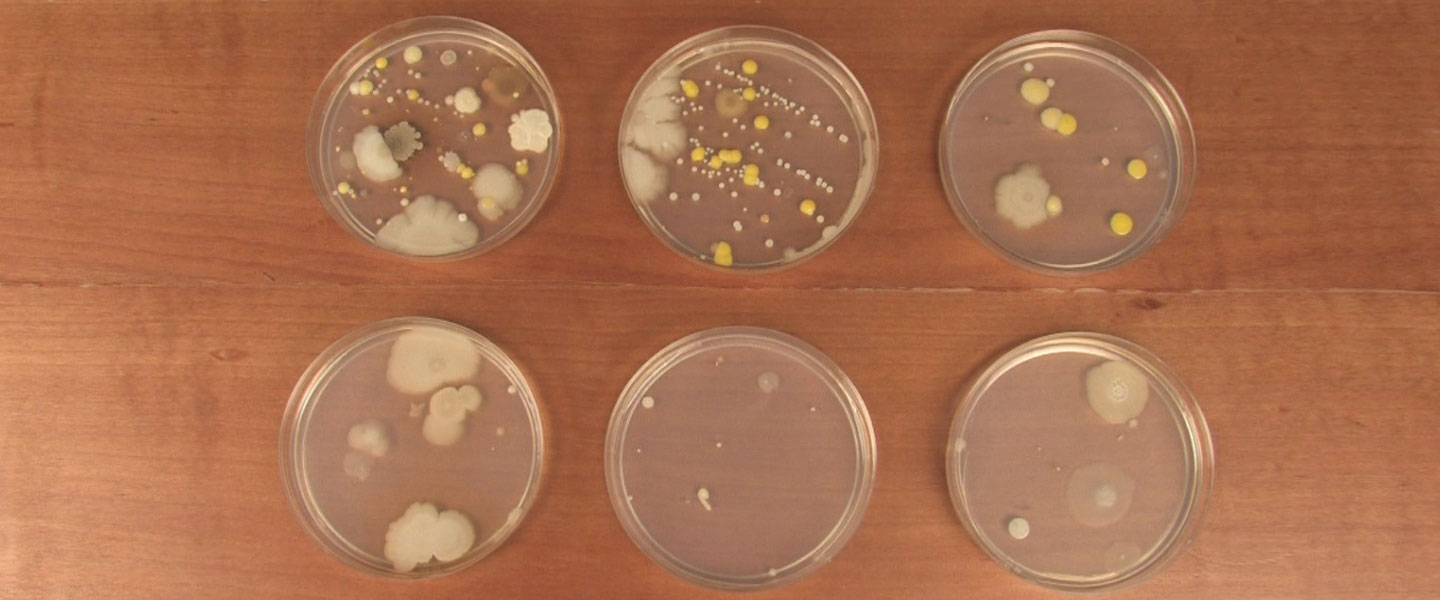
Here is a picture of Petri dishes similar to the ones that students were using in lab this week.
-
This topic was modified 3 years, 9 months ago by
Tonja Clay.
-
This topic was modified 3 years, 9 months ago by
-
-
AuthorPosts
- You must be logged in to reply to this topic.